Nath Bio-Genes: Committed to reduce farming losses through breeding crop varieties with resistance to Biotic Stresses
Biotic stresses are a major cause of yield loss in agriculture worldwide. Globally, crop production losses are estimated at USD 220 billion annually due to diseases and USD 70 billion due to insect pests. In India alone, combined losses from diseases and insects’ range between ₹90,000 crores and ₹2,00,000 crores every year.
These losses impact both volume and value, posing a serious threat to global food and nutritional security. They also contribute to hunger and poverty, leading to significant human and societal challenges.
At Nath Bio-Genes India Ltd. (NBIL), developing biotic stress–tolerant crops is a core priority to strengthen the farming economy and support food security for societal well-being.
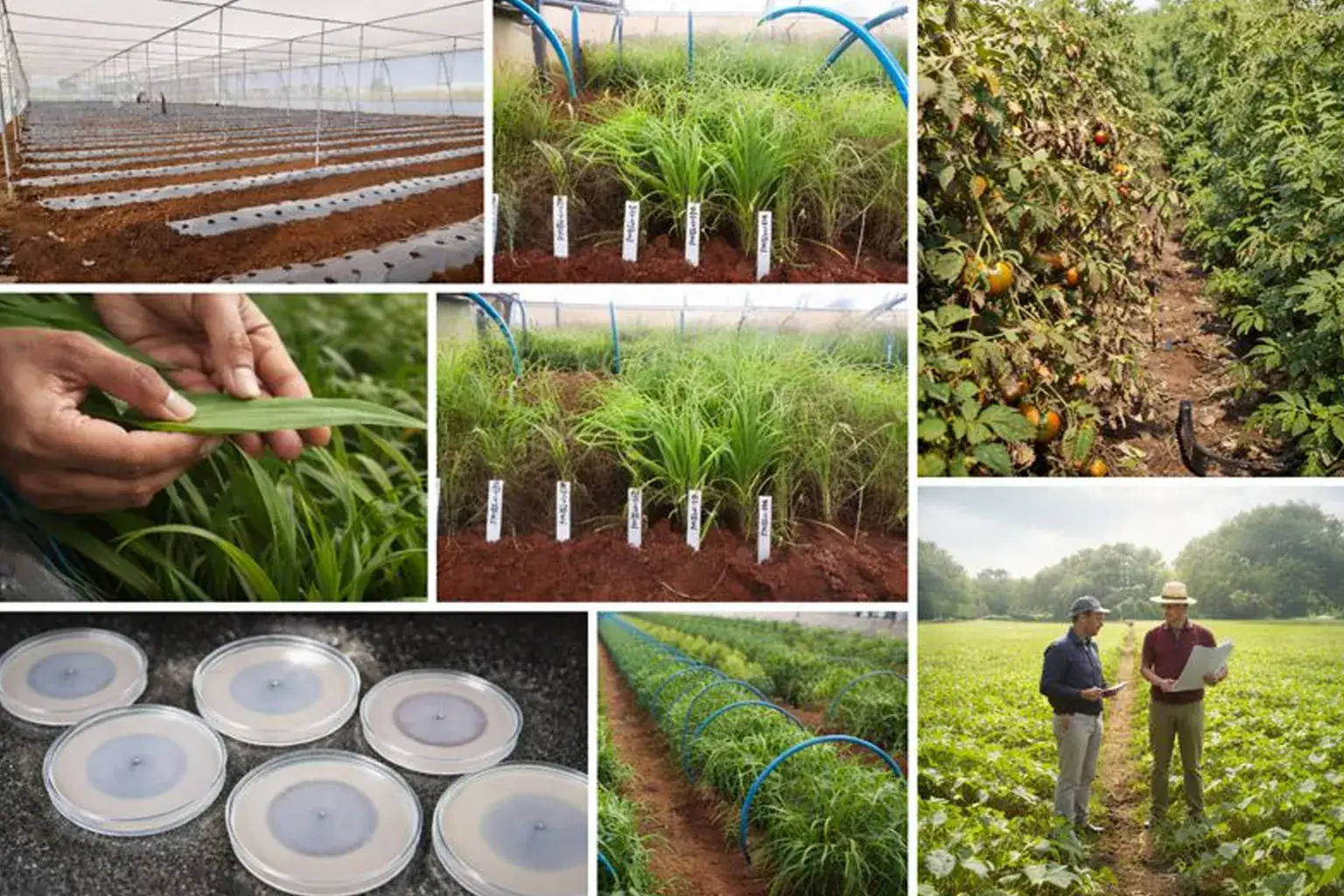
NBIL has established 33 biotic stress screening hotspots across India, enabling the successful development of resistant varieties, hybrids, and parental lines, and significantly reducing crop losses. Crop-wise disease and insect screening centers include:
| Cotton (4) | Maize (3) | Pearl Millet (3) |
| Rice (5) | Okra (5) | Tomato (4) |
| Cucurbits (3) | Bitter Gourd (3) | Chilli (3) |
In addition to these field screening centers, NBIL has developed state-of-the-art artificial epiphytotic and/or zoophytic screening facilities, enabling intense and controlled evaluation. These facilities play a critical role in addressing complex biotic stress challenges and delivering resistant products to farmers.
Across crops, approximately 30 biotic stresses and their biotypes are addressed using conventional breeding, transgenic technologies, and DNA marker-based approaches to improve resistance and break yield barriers.
NBIL has also established strong collaborations with national and international organizations, partnering on screening locations and research initiatives to accelerate the development of biotic stress–tolerant crops. Teams comprising crop breeders, entomologists, pathologists, and product development professionals work collaboratively to achieve these goals.
For each crop, essential “must-have” traits are clearly defined, and no hybrid or variety is released to farmers without meeting these standards. Sanket in Cotton with enhanced resistance to sucking pest, tomato hybrids with Ty markers, Rice Varieties with blight and blast tolerance, virus resistant okra hybrids, blast tolerant pearl millet hybrids etc stand as testimony of the NBIL commitment
Resistance to biotic stresses directly enhances farm income by increasing total harvested yield. Happy farmers become long-term partners of NBIL, and we remain committed to building enduring farmer relationships.
Strong commercial breeding programs like those at NBIL enable long-term strategies to address emerging challenges in crop development. Addressing biotic stress aligns with our vision, to be farmers’ most trusted partner in scaling their pride and prosperity.